
 Will Love Them Till My Last Breath ...


Showing posts with label must read. Show all posts
Showing posts with label must read. Show all posts


Things your pet shouldn't eat
Listed here, from most (1) to least (4) dangerous, are common foods and drinks that make pets sick. If you think your dog, cat, or bird has consumed one of these items and you are concerned, contact your veterinarian.
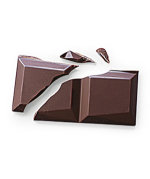
1. Chocolate
Why: Stimulates the nervous system and the heart. Poisonous to: All species, but dogs are most likely to eat dangerous quantities. Possible effects of poisoning: Vomiting, increased thirst, restlessness, agitation, increased or irregular heartbeat, increased body temperature, tremors, seizures.
2. Grapes, Raisins
Why: Damage the kidneys. Poisonous to: Dogs, cats. Possible effects of
poisoning: Increased thirst, increased urination, lethargy, vomiting.
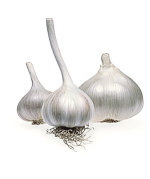
Why: Damage red blood cells, causing anemia. Poisonous to: Cats, dogs. Possible effects of poisoning: Vomiting, red-colored urine, weakness, anemia.
Below are more things that pets shouldn't eat :


5. Alcoholic Drinks
Why: Depress the nervous system.Poisonous to: All species.
Possible effects of poisoning: Vomiting, disorientation, diarrhea, lethargy, lack of coordination, difficulty breathing, tremors, coma, seizures.

6. Raw Yeast, Bread Dough
Why: Forms gas in the digestive track; fermentation of yeast causes alcohol poisoning.Poisonous to: All species, but only dogs typically ingest it.
Possible effects of poisoning: Distention of abdomen, vomiting, disorientation, diarrhea, lethargy, lack of coordination, difficulty breathing, tremors, coma, seizures.

7. Macadamia Nuts
Why: Cause muscle and nervous-system problems.Poisonous to: Dogs.
Possible effects of poisoning: Vomiting, lethargy, weakness, increased body temperature, tremors.
 8. Avocados
Why: Contain persin, which damages the heart muscle.
Poisonous to: Most species―birds are especially sensitive.
Possible effects of poisoning: Vomiting, diarrhea (in dogs), lethargy, difficulty breathing (in birds and rodents).

Cat Scratching - How To Stop Your Cat Scratching The Furniture
Assalamualaikum..
Why do cats scratch?
 Scratching (also known as stropping) is a normal behaviour in cats. Unfortunately some cats can cause countless headaches for their owners by scratching household furnishings, which leads to damage & great expense. Scratching of furniture is a leading cause of cats being surrendered to shelters.
This article aims to teach cat owners why cats scratch & how to train your cat to redirect the scratching to a more appropriate object.
Cats scratch for a couple of reasons. Predominantly it it to sharpen the claws. Scratching also helps remove the outer castings of the claw.
Scratching also feels good to cats. It is a way of loosening up leg & shoulder muscles & tendons in the cat's paws.
Cats have glands all over the body, including the paws. During scratching pheromones are released from the glands in the paws onto the object. Scratching is a way for cats to mark out their territory.
How to stop scratching:
You can't stop scratching, it is a perfectly normal behaviour. What you can do is train your cat to scratch on specifically designated objects so they will avoid ruining your furniture.
- For some owners declawing (which is prohibited in most countries) is their chosen method to prevent scratching. This is a rather painful operation which involves amputation of the cat's claw up to the first joint. The majority of people strongly disagree with declawing of cats for a multitude of reasons. It is painful & unnecessary, it can also lead to other behavioural problems such as biting & inappropriate urination. Also, cats derive great pleasure from scratching & declawing deprives them of this pleasure. There are many alternative methods which are far kinder than declawing, which is really only performed for the owner's convenience anyway.
- The plan is to make the current target unpleasant while providing your cat with a more attractive alternative such as a scratching post or cheaper scratching boards which can be hung from a door handle. There's a huge variety on the market which will suit all tastes & budgets. Most scratching posts are covered either in carpet or sisal. If possible, temporarily cover the object your cat is scratching with some thick plastic or double sided tape, which will act as a deterrent.
- Another you may want to consider are water sprays (use when your cat starts scratching the furniture), this may work but it may just stop your cat scratching when you are around.
- You can also try placing orange peel around the location. Many cats find the citrus smell extremely unpleasant.
- Now you need to encourage your cat to use the scratching post provided. You can purchase catnip spray from many pet shops & spray this on the post to attract the cat, or rub some dried catnip on the post. Cats enjoy a scratch after a nap, so try placing the scratching post close to your cat's favoured sleeping location.
- If you see your cat making a beeline for a favourite piece of furniture to scratch on, gently pick up the cat & move it over to the scratching post. If the cat uses it heap plenty of praise on your cat. Cats respond far better to positive behaviour than negative behaviour from their owners.
- Cutting your cat's claws regularly will minimise damage caused to your furniture. For help on trimming your cat's claws read here.
- Never physically punish a cat when you catch it scratching inappropriately. Physical punishment serves no purpose & more often than not has a negative effect on how your cat perceives you. A firm "no" & a spray with the water spray are more effective than smacking your cat.
With time & patience you will be able to re-train your cat to use a more appropriate object than your furniture. Good luck!!!
Cat Trees, Cat Furniture and Cat Scratching Posts
Assalamualaikum..

Scratching (also known as stropping) is a normal behaviour in cats. Unfortunately some cats can cause countless headaches for their owners by scratching household furnishings, which leads to damage & great expense. Scratching of furniture is a leading cause of cats being surrendered to shelters. Providing a cat tree for your cat to use will greatly reduce the chances of household furniture being used.
The larger cat trees offer more than just the opportunity for your cat to scratch. With tunnels, perches & even attachments that will keep your cat entertained for hours. Tall ones can be placed close to windows, providing a spot for your cat to laze in the sun & watch the world go by. This is especially important for indoor only cats. Larger cat trees can also provide your cat(s) with hours of fun playing on & around.
Photo courtesy of Funky Cat
What is the difference between a cat tree & a cat scratching post?
The two are interchangable. A cat tree is also a cat scratching post, but some scratching posts may be very basic & do not provide the opportunity for your cat to climb onto. The smallest cat scratching posts (also known as a cat scratching board) can be hung over a door handle. This is especially useful if you live in a small flat or apartment where space is limited.
Which cat tree should I buy?

For the DIY enthusiast, there are many sites on the Internet that offer free instructions to build your own.
Funky Cat products are a favourite among Australian cat lovers. Not only are they incredibly sturdy, but they look fantastic too.
Where to buy a cat tree:
Pet shops, online & specialist cat tree manufacturers are the best places to buy a cat tree.
Training your cat to use a cat tree (and not the furniture):
Now you need to encourage your cat to use the scratching post provided. You can purchase catnip spray from many pet shops & spray this on the post to attract the cat, or rub some dried catnip on the post. Cats enjoy a scratch after a nap, so try placing the scratching post close to your cat's favoured sleeping location.
Cat trees can be purchased from most pet shops or online. If space permits, I would recommend you buy a larger one, which also provides your cat with a perch to sit & sleep on. The larger the better, especially if you have more than one cat.


Cat Claws - Anatomy, Care & Disorders of the Cat Claw
Assalamualakum..

The claw is a scythe shaped appendage that is attached to the end bone of the toe. The front feet have five toes & five claws per foot & the back feet have four toes & four claws per foot. Some cats (known as polydactyls) have more than the normal number of toes & claws.
Cats are able to extend & retract their claws using specialised muscles, tendons & ligaments. Cat claws have several functions including; climbing, balance, digging, self defence & holding onto prey. The claw is made up of keratin, a hard protein that makes up the sheath & in the centre of the claw is the quick which contains blood & nerves.

Diseases & disorders that affect the claws:
- Pemphigus an autoimmune disease may affect the claws
- Systemic lupus erythematosus may affect the claws
- Bacterial infection
- Onychomycosis (fungal infection of the claw & clawbed)
- Trauma (tearing etc)
Nail (claw) biting in cats:
Some cats will bite & chew their claws while they are grooming. This is to remove the outer sheath from the claw.
Nail biting can become a compulsive behaviour in cats, just as it does in humans, but generally it is just a normal part of their grooming routine. It is always a good idea to run such behaviours past your veterinarian.
Declawing:
A procedure carried out in the US & Canada, declawing is performed for non medical reasons to prevent the cat scratching furniture or family members (both pet & human).
It is often commonly assumed that declawing is the removal of your cat's claws, however it is a little more involved than that. Declawing involves the amputation of not only the claw, but this extends up to the first knuckle. This will lead to some pain & discomfort after surgery. Other possible problems associated with declawing include;
- Bleeding
- Infection
- Bone protrusion into the pad of the paw *
- Lameness
- Behavioural problems such as biting & litter box problems
There are several alternatives to declawing but the main goal is to prevent your cat clawing & damaging furniture. This may involve;
- Providing your cat with a cat tree/scratching post & working with the cat to encourage it to use that instead of your furniture. If space is a problem, you can buy small scratching posts that you hang over door handles that take up no room at all. For more information on training your cat to use a scratching post, read here.
- Using Soft Claws.
- Trimming your cat's claws regularly.
How to stop scratching:
You can't stop scratching, it is a perfectly normal behaviour. What you can do is train your cat to scratch on specifically designated objects so they will avoid ruining your furniture.
- For some owners declawing (which is prohibited in most countries) is their chosen method to prevent scratching. This is a rather painful operation which involves amputation of the cat's claw up to the first joint. The majority of people strongly disagree with declawing of cats for a multitude of reasons. It is painful & unnecessary, it can also lead to other behavioural problems such as biting & inappropriate urination. Also, cats derive great pleasure from scratching & declawing deprives them of this pleasure. There are many alternative methods which are far kinder than declawing, which is really only performed for the owner's convenience anyway.
- The plan is to make the current target unpleasant while providing your cat with a more attractive alternative such as a scratching post or cheaper scratching boards which can be hung from a door handle. There's a huge variety on the market which will suit all tastes & budgets. Most scratching posts are covered either in carpet or sisal. If possible, temporarily cover the object your cat is scratching with some thick plastic or double sided tape, which will act as a deterrent.
- Another you may want to consider are water sprays (use when your cat starts scratching the furniture), this may work but it may just stop your cat scratching when you are around.
- You can also try placing orange peel around the location. Many cats find the citrus smell extremely unpleasant.
- Now you need to encourage your cat to use the scratching post provided. You can purchase catnip spray from many pet shops & spray this on the post to attract the cat, or rub some dried catnip on the post. Cats enjoy a scratch after a nap, so try placing the scratching post close to your cat's favoured sleeping location.
- If you see your cat making a beeline for a favourite piece of furniture to scratch on, gently pick up the cat & move it over to the scratching post. If the cat uses it heap plenty of praise on your cat. Cats respond far better to positive behaviour than negative behaviour from their owners.
- Cutting your cat's claws regularly will minimise damage caused to your furniture. For help on trimming your cat's claws read here.
- Never physically punish a cat when you catch it scratching inappropriately. Physical punishment serves no purpose & more often than not has a negative effect on how your cat perceives you. A firm "no" & a spray with the water spray are more effective than smacking your cat.
With time & patience you will be able to re-train your cat to use a more appropriate object than your furniture. Good luck!!!
Claw care:
Cat claws continually grow. They are usually worn down during outdoor activity such as climbing & scratching. Indoor cats may keep their claws short by using a cat tree/scratching post. However, older cats, or cats without a scratching post can develop overgrown claws. It is important to keep your cat's claws trimmed to avoid overgrown claws which can result in injury, or in the case of my old & arthritic cat, the claws growing into the foot pad.
Regularly checking your cat's foot & claws should begin from kittenhood, so that your cat becomes used to having this area handled.
How To Trim Your Cat's Claws
Assalamualaikum..
Learning to trim your cat's claws will help prevent your furniture from being damaged & save you money by avoiding having to take your cat to a vet or pet groomer when it needs it's claws trimmed.
It is recommended you get a cat used to having it's feet handled from an early age. This can be done by gently massaging your cat's feet. Some of my cats are less than thrilled at having their claws trimmed, in such a case I recommend you only trim a couple of claws per session, or do as I sometimes do & gently trim then when the cat is napping. If you have a particularly reluctant cat, there is a product called Felifriend you could try. This is a synthetic pheromone you spray on your hands, it may assist in calming your cat down.
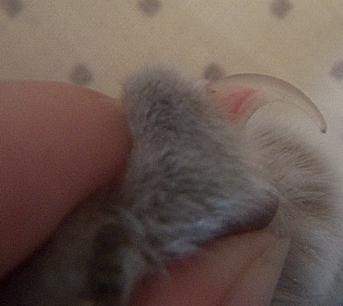
- Hold the cat's paw in your hand with your fingers on the underside & your thumb on the top.
- Gently apply a forward pressure to one toe. This causes the claw to come out of the sheath, which makes it more visible.
Cat Claw 1
Notice how in the middle of the claw is pink, this is the quick & it contains blood & nerves. This must NOT be cut as it will cause pain & bleeding. If you do accidentally cut this, apply a styptic pencil Silver Nitrate sticks or Potassium of Permaganate to the claw to stop the bleeding. If you don't have these products, ordinary household flour will do. The claw should stop bleeding in about 5 minutes.
Cat Claw - Showing Quick
There are several kinds of nail clippers you can use. I use regular nail clippers for humans, but you can also purchase clippers specifically for cat's claws, these should be available from your vet or pet supply shop. Nail clippers should be very sharp as blunt ones will crush the nail, not cut it.

Clipping cat's claw
Aim to trim between the tip of the claw & the quick.

Cat's claw trimmed
Some people trim their cat's back claws, I don't, this is because my cat's tend to wear their back claws down naturally. I trim their front claws approximately every 3-4 weeks.